Chemoembolization of the liver
Also called TACE
DraftNot yet reviewed by the clinical team · Last edited 14 October 2026
TACE treats liver cancer from inside the blood vessels. A thin tube carries cancer medicine right to the tumour, then blocks the artery that feeds it, with no cut in the belly.
- About 1 to 2 hours
- for the procedure itself
- Groin or wrist
- a small opening, no cut in the belly
- 1 to 2 nights
- in hospital for most people
- 1 to 2 weeks
- of feeling unwell for many people
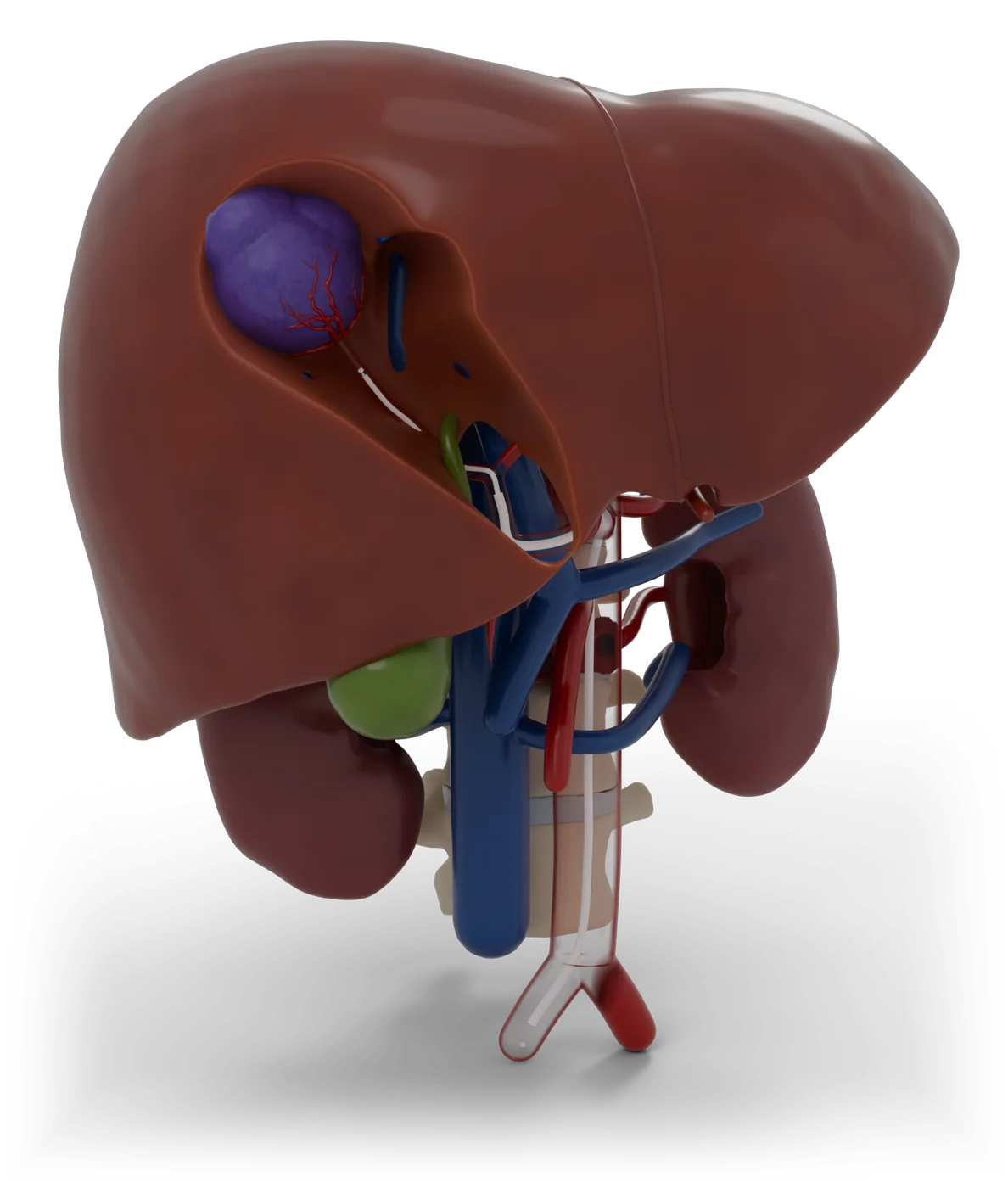
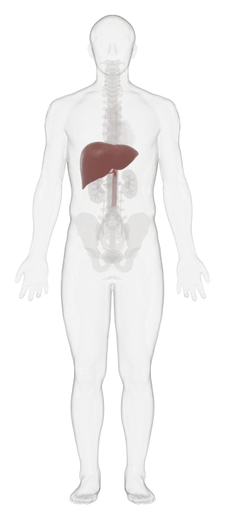
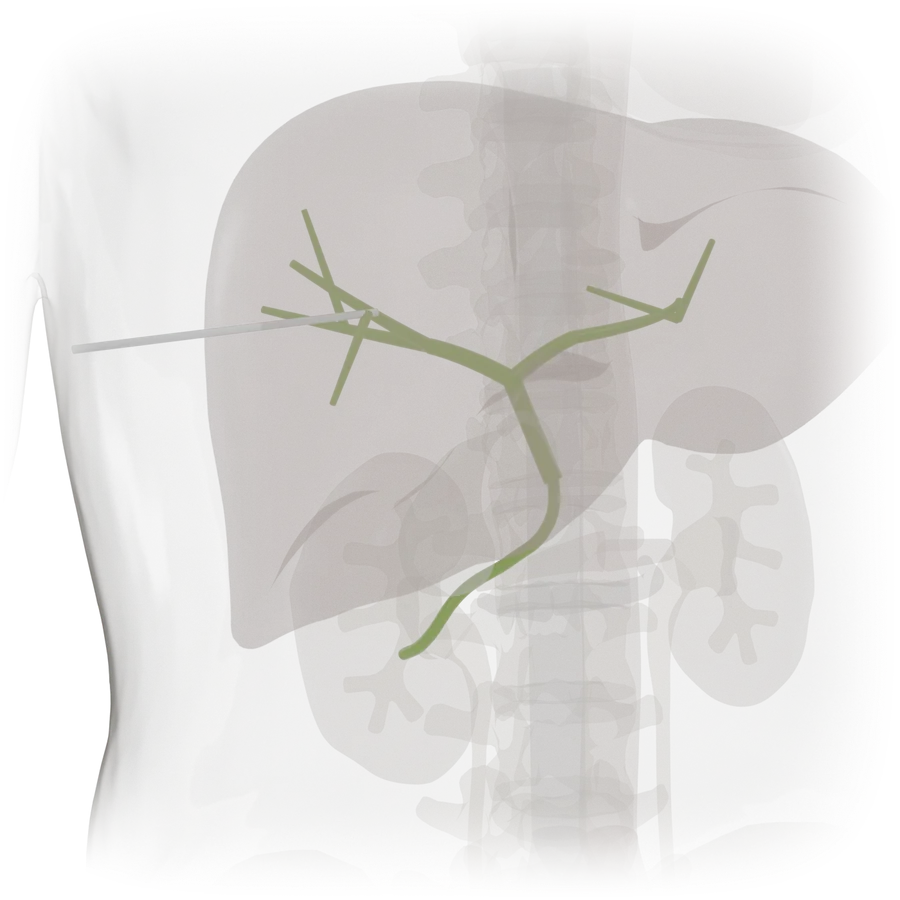
Where this happens: Liver. TACE treats tumours in the liver, in the upper right belly under the ribs. The thin tube goes in through an artery at the groin, or sometimes the wrist.
The short version
Some liver cancers start in the liver, and others spread there from other parts of the body.
In TACE, the IR team passes a thin tube from your groin or wrist to the artery that feeds the tumour, guided by live X-ray.
They put cancer medicine straight into the tumour and then block its blood supply, while the healthy liver keeps getting blood from a large vein.
TACE is usually not a cure, but it can shrink the cancer or slow it down. Most people stay in hospital for a night or two and feel unwell for a week or two after.
Step through it on the model
Start from the beginningEach step shows one thing on a 3D model you can turn. Jump to any step.
See all 12 steps
What it treats
Afterwards
Your visit
What to do before, what happens on the day, and what recovery is usually like. Your care team will give you instructions for your own situation. Follow theirs if they differ.
Before your procedure
Things to do. Tick them off as you go; your ticks stay on this device only.
On the day
Arriving. You change into a gown. A small IV line (a thin tube) goes into a vein in your arm. Fluids through it help protect your kidneys.
Medicines first. You may get an antibiotic, and medicine to prevent pain and nausea.
In the IR room. The room has a large X-ray machine and a narrow table. The team checks your heart rate and blood pressure often.
Sedation. Most people get medicine through the IV to feel relaxed and sleepy. Some people have a general anesthetic and are fully asleep.
Numbing. The skin at your groin or wrist is numbed. It stings for a short time. The sting soon wears off.
The treatment. The procedure usually takes about 1 to 2 hours. When dye goes in, you may feel warm for a few seconds.
Recovery
- The first hours
You rest in bed for a few hours. You may spend 2 to 6 hours in the recovery area. Nurses check your pulse, blood pressure and the puncture site often.
- In hospital
Most people stay a night or two. You go home when you feel well enough.
- The first week or two
Many people feel like they have the flu: pain under the right ribs, nausea, a fever and tiredness. A mild fever can last up to a week. Take your pain and nausea medicine as your team tells you.
- Drinking and eating
Drink plenty of fluids for the first few days. One patient guide suggests about 2 litres of water a day, unless your team has told you to limit fluids. Small, light meals can help with nausea.
- Activity
Most people get back to normal activities within about a week. Tiredness and a poor appetite can last 2 weeks or longer.
- Scans and next steps
You have blood tests and a scan about 4 to 12 weeks later. Then scans are often repeated about every 3 months. You may need TACE more than once.
When to get help
Call 9-1-1 now if you have
- Sudden, severe pain in your belly
- Fainting, collapsing, or feeling very dizzy
- Chest pain
- Bad trouble breathing
- Vomiting blood
- Bleeding at the groin or wrist that does not stop with firm pressure
- A lump at the groin or wrist that is quickly getting bigger
Call the interventional radiology (IR) team today if you have
- Belly pain that keeps getting worse, or is not helped by your pain medicine
- A temperature of 38°C or higher, or a fever that suddenly goes up
- A fever that lasts more than a week
- Shortness of breath
- Fluid draining from the puncture site
Phone number added by the hospital before launch
If you can’t reach them, go to the nearest emergency department.
Not sure? Call HealthLink BC at 8-1-1
- You are not sure if something is normal
- Questions about medicines, eating or activity when your team is closed
- Non-urgent advice from a nurse, any time of day
A nurse can give health advice any time, day or night.
Call 8-1-1Deaf or hard of hearing: call 7-1-1. Translation services are available in over 130 languages.
Benefits and risks
What it can do for you
- No cut in the belly. The treatment goes in through a small opening at the groin or wrist.
- The medicine goes straight to the tumour, so much less of it reaches the rest of your body.
- One patient guide says that in about 2 out of 3 people, TACE stops the tumour growing or shrinks it. On average this lasts about 10 to 14 months, and TACE can often be repeated.
- In a large review of studies of about 10,000 people with HCC, the tumour shrank by a clear amount in about half of them after TACE.
- In that review, about 7 in 10 people were alive 1 year after TACE, about 5 in 10 after 2 years, and about 3 in 10 after 5 years. These are averages from studies published up to 2013. They cannot tell you what will happen to you. Your own outlook depends on your cancer, your liver and your health, so ask your doctor what these numbers mean for you.
- For some people with liver cancer who cannot have surgery, TACE has helped them live longer than having no treatment.
- It can keep a tumour under control while you wait for a liver transplant, or sometimes shrink it so surgery becomes possible.
- TACE is usually not a cure. It is one part of a longer plan to control the cancer and help you feel as well as possible.
What can go wrong
Every procedure has some risk, and most people do not have a serious problem. Each risk is listed with how often it happens. They are grouped on one scale, from very common to very rare.
Very common: more than 1 in 10 people
Post-embolization syndrome (feeling unwell after treatment)
About 50 in 100 people (half), says one European patient guide. Studies report anywhere from 15 to 90 in 100, because they define it in different ways. In a large review, about half of people had belly pain. About 1 in 3 had nausea.
Pain under the right ribs, nausea, vomiting, fever and tiredness in the days after TACE. It happens because the treated tissue breaks down. It is expected, it usually goes away on its own, and medicine helps. It usually starts within the first week and can last 1 to 2 weeks. Tiredness can last longer.
Kidney strain from the dye or the medicine
About 12 in 100 people had kidney strain after TACE.
Where this number comes from
About 12 in 100 people had kidney strain after TACE, in a review of studies (between 8 and 16 in 100). Studies measure it in different ways.
The X-ray dye, the medicine, or not drinking enough can strain the kidneys. This may be short-term. The risk is higher if you have diabetes or kidney disease. Fluids through a drip help protect the kidneys. A few people have an allergic reaction to the dye. Your team checks your kidney blood tests before and after.
Common: 1 in 10 to 1 in 100 people
The liver working less well, or liver failure
Liver failure happens in about 1 in 100 people, says one UK patient guide. Death after TACE happens in about 6 in 1,000 people, in a large review of studies.
Blood tests often show the liver is strained for a short time after TACE, and this usually gets better. This is the most common finding after TACE. Rarely, the liver stops working well (liver failure). This is more likely if the liver is already badly scarred (cirrhosis). It is the most common cause of death after TACE.
Uncommon: 1 in 100 to 1 in 1,000 people
Bruising or bleeding where the tube went in
About 3 in 1,000 people had a bulge in the groin artery (a false aneurysm) that needed treatment, in one study of 1,120 people. Fewer than 1 in 1,000 have serious bleeding or a blocked artery that needs a small operation, says one UK patient guide.
A bruise and soreness at the groin or wrist are common and settle in a few days. Very rarely there is serious bleeding, or the artery gets blocked or damaged, and a small operation or other treatment is needed.
Infection or abscess in the liver
About 1 in 200 people had a liver abscess.
Where this number comes from
About 1 in 200 people had a liver abscess, in one study of 1,120 people. A review of 32 studies found a liver abscess in about 5 in 1,000 people.
The treated area can get infected, and a pocket of pus (an abscess) can form. It is treated with antibiotics, and sometimes a drain (a thin tube) to let the pus out. People who have had surgery that joined a bile duct to the bowel, or who have diabetes, have a higher risk.
Medicine or beads reaching the wrong place
About 2 in 1,000 people had gallbladder inflammation, in one study of 1,120 people. In the same study, 2 people had a pocket of leaked bile from damaged bile ducts that needed treatment.
Some of the treatment can travel into a nearby branch, such as the small artery to the gallbladder. This can cause gallbladder inflammation (cholecystitis) or damage a bile duct. The X-ray map of the arteries before treatment helps prevent this.
Bleeding from the tumour, or a blockage in the lungs or brain
About 5 in 1,000 people had a bleed or burst from the liver, in one study of 1,120 people. In the same study, 2 people had a clot in the lungs. One person had oily mix reach the brain.
Very rarely, a treated tumour bleeds or bursts through the surface of the liver, or a clot or some of the oily mix travels to the lungs or brain. These are emergencies and need treatment in hospital. In one study, about 2 in 100 people had a serious problem of any kind, usually within the first 2 weeks or so.
Other options
Other options (7)
Questions to ask
Tick the ones you want to ask. Your ticks stay on this device only.
Check your understanding
Check your understanding (5)
Nothing is saved. It is just for you.
Liver tumours get almost all their blood from the hepatic artery. The healthy liver gets most of its blood from the portal vein.
A catheter goes into an artery at the groin or wrist and is steered to the artery that feeds the tumour. There is no cut in the belly.
After the medicine goes in, the artery branch to the tumour is blocked, which cuts off its blood and keeps the medicine there longer.
Many people feel unwell for a week or two after TACE. Call the IR team if the pain keeps getting worse, your temperature is 38°C or higher, or you are worried.
TACE is usually not a cure. It aims to control the cancer, and many people have it more than once.
Words used
Words used (12)
- Hepatocellular carcinoma (HCC)
- The most common cancer that starts in the liver. It starts in the liver’s main cells.
- Liver metastases
- Cancer that started somewhere else, such as the bowel, and spread to the liver.
- Hepatic artery
- The artery that brings blood to the liver. Liver tumours get almost all of their blood from it.
- Portal vein
- A large vein that carries blood from the gut to the liver. It gives a healthy liver most of its blood.
- Chemotherapy
- Medicine that kills cancer cells.
- Embolization
- Blocking a blood vessel on purpose, from the inside.
- Catheter
- A thin, soft, hollow tube that is steered through blood vessels.
- Contrast (dye)
- A liquid that shows up on X-ray, so the team can see the blood vessels.
- Lipiodol
- An oily liquid that shows up on X-ray. It is mixed with the medicine in one type of TACE.
- Drug-eluting beads (DEB)
- Tiny beads that soak up medicine, block a vessel, and let the medicine out slowly.
- Post-embolization syndrome
- Pain, nausea, fever and tiredness in the days after the treatment. It is common and usually settles on its own.
- Cirrhosis
- Scarring of the liver. It can make the liver less able to cope with treatment.
Sources
Sources (16)
- British Society of Interventional Radiology (BSIR) and The Royal College of Radiologists. Patient information: Transarterial chemoembolisation (TACE)
- CIRSE (Cardiovascular and Interventional Radiological Society of Europe). Patient information: Radioembolization (TARE) and Chemoembolization (TACE), 2025
- RadiologyInfo.org (RSNA and ACR). Transarterial Chemoembolization (TACE)
- Canadian Cancer Society. Transarterial chemoembolization (TACE) for liver cancer
- Canadian Cancer Society. What is liver cancer?
- Canadian Cancer Society. Treatments for liver cancer
- Cancer Research UK. Embolisation treatment for liver cancer (TAE and TACE)
- Quantitative Imaging in Medicine and Surgery (Wang Y, Wang H, Liu Z, Chang Z), 2025. Evolution of transarterial chemoembolization-related liver abscess over time: a systematic review and meta-analysis
- Hepatology (Lencioni R, de Baere T, Soulen MC, Rilling WS, Geschwind JF), 2016. Lipiodol transarterial chemoembolization for hepatocellular carcinoma: A systematic review of efficacy and safety data
- Frontiers in Oncology (Yao Y, Huang X, Zhao C, et al.), 2024. Summary of the evidence of best practices for the prevention and treatment of embolism syndrome after TACE in primary liver cancer
- Therapeutic Advances in Medical Oncology (Arendt N, Kopsida M, Khaled J, Sjoblom M, Heindryckx F), 2025. Gastrointestinal side effects in hepatocellular carcinoma patients receiving transarterial chemoembolization: a meta-analysis of 81 studies and 9495 patients
- Medicine (Tu J, Jia Z, Ying X, et al.), 2016. The incidence and outcome of major complication following conventional TAE/TACE for hepatocellular carcinoma
- Seminars in Interventional Radiology (Kord A, et al.), 2021. Postcontrast Acute Kidney Injury After Transarterial Chemoembolization
- Frontiers in Oncology (Mou Z, Guan T, Chen L), 2022. Acute Kidney Injury in Adult Patients With Hepatocellular Carcinoma After TACE or Hepatectomy Treatment
- HealthLink BC. HealthLink BC (8-1-1 services and hours)
- HealthLink BC. HealthLink BC 8-1-1 services
About this guide
About this guide
- Status
- Draft: not yet reviewed by the clinical team. The interventional radiology team will review it before it is used with patients, and the date of that review will show here.
- How it was written
- Drafted with AI writing tools from 15 published sources, then fact-checked against those sources by a separate AI check. Anything the sources did not support was taken out. The interventional radiology team will review it before it is used with patients.
- Last edited
- 14 October 2026
- Document
- Pathway P-007 · Version 0.5 · Last reviewed: not yet · Next review: 12 months after sign-off · Owner: the interventional radiology team
Was this guide clear?
Tell us if anything was hard to follow, or if something on the page looks wrong. Please do not include details about your own health. For questions about your care, contact your care team.
Both open an email to the project team. Project email: added before launch